





How to correctly size an ambient loop heat network using diversity factors
Contents |
[edit] Introduction
As their name suggests, ambient loops operate at significantly lower temperatures than traditional communal high temperature heating systems. This means that a different approach is required when sizing the ambient loop distribution system. Calculation of such systems follows a procedure where diversity is used to determine the design flowrate for a development. It also determines the sizing of pipework and circulation pumps for an ambient communal network solution such as the Zeroth Energy System. The in-apartment flowrates required for the selected size of the Zeroth Heat Pumps can then be calculated.
The Zeroth Energy System uses an ambient communal water loop designed at 25°C, and in-apartment water-to-water heat pumps to provide space heating, comfort cooling and hot water. The system has been successfully installed and set to work in numerous projects across the UK. These installations are demonstrating that by reducing the temperature in the energy loop, the Zeroth Energy System can help resolve challenges associated with plant fuel source, plant and riser space, and heat loss into communal spaces. Heat distribution losses are one of the main causes of low system efficiency traditional communal heating systems that use centralised boiler systems suffer from, and issue which can be fundamentally addressed through the application of ambient distribution solutions.
The ‘Design Guide for Diversity Factors for Ambient Temperature Networks using the Zeroth Energy System’ was created by a global provider of technology testing and certification, TÜV SÜD, in association with Wallace Whittle, and offers guidance regarding the correct sizing of ambient networks using diversity factors.
[edit] How can we use diversity factors to determine the design flowrate for a development?
Once the correctly sized Zeroth Heat Pumps are selected, the design flow rate of the system can be calculated as:
Mass flowrate (kg/s) = total loop load (kW) ÷ (ΔT x Cp)
The ΔT is the temperature difference between flow and return, which for the Zeroth Energy System stands at 5k. The Cp refers to the Specific Heat Capacity of water (4.18 kJ/(kg*K) at 25°C).
To complete the calculation, the total diversified peak load of the development is required. This will be the sum of all Zeroth Heat Pump duties:
Total Peak Load = (Space heating diversity x Total apartments heating load) +(Hot water diversity x Sum of Zeroth Heat Pump Duties.)
You can read more on how to apply diversity to define peak hot water needs here. The total peak load calculation should include any systems connecting into the ambient loop from any part of the development, such as apartments, communal areas, commercial spaces. If cooling is supplied by the Zeroth Energy System, the total cooling load of a building, including any non-residential space, must be included.
The total loop load needed for the mass flow rate can now be calculated:
Total heat input from central plant (total loop load) = (Space heating diversity x Total energy extracted from loop in heating mode) + (Hot water diversity x Total energy extracted from loop in HWC* reheat mode.)
The loop load is the energy required from the ambient loop by each of the Zeroth Heat Pumps. You can read more on how diversity calculation is applied to HVAC systems and how it can shape the HVAC specification for residential developments here.
[edit] Sizing pipework and ambient loop circulation pump
Like traditional communal heating system designs, the ambient loop of the Zeroth Energy System uses water as a distribution medium through pressurised plastic or steel pipework. The electrical energy required for pumping is the driving factor when selecting the pipe sizing for an ambient loop. Pipe sizing away from the index run can differ if required. Reference should be made to CIBSE Guide C for guidance on velocity and pressure drop limits.
The ambient loop circulation pump size will be determined by the flowrates on the index run and can be calculated using software or spreadsheets to achieve the minimum required flowrate. Correct calculations will help avoid oversizing of circulation pumps that can lead to lower operational efficiency.
[edit] Related articles on Designing Buildings
Featured articles
Check out some of the best features and news from Designing Buildings as well as key stories from around the web.
Bridging the gap between clients and contractors

Concerns remain around contractor quality, capability, and delivery.
Construction Management, 10 June.
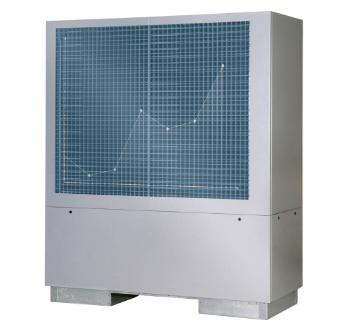
Heat pumps beat boilers in new home tests.
Building Safety Act implementation in Wales

CIAT to host industry panel on 26 June.

New and updated CLC building safety guidance.
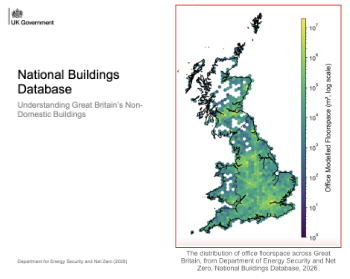
New UK National Buildings Database.
Building Safety Wiki Interviews

Chief executive of the British Woodworking Federation.
Planning condition discharge in England and Wales

A brief explanation from a building compliance expert, with further links.
Overheating guidance and tools for building designers

Guidance for dealing with element of building fabric control that have increasing importance.
Shading for housing, a design guide

From the Good Homes Alliance and British Blind and Shutter Association.
UK Standard Skills Classification (SSC)

A shared framework for describing skills needs.
Social media ban consultation comes to close

CIOB urges UK Government to consider social media’s role in careers guidance in ban debate.